
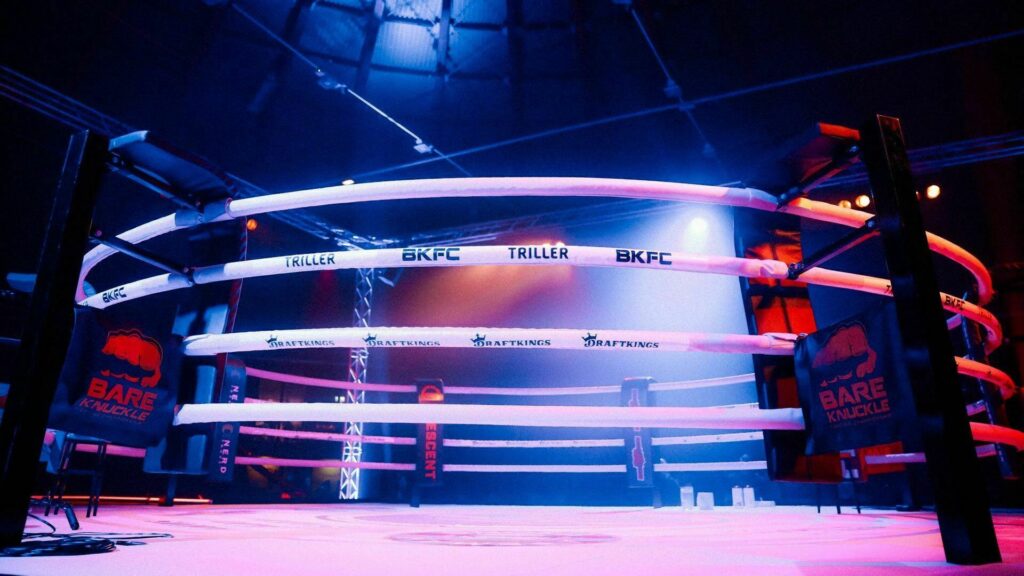
As the Bare Knuckle Fighting Championship (BKFC) enters the first quarter of 2026, the betting landscape has shifted from speculative novelty to a data-rich environment. Professional handicappers are now utilizing longitudinal studies of bare knuckle injury rates and stoppage correlations to find edges that traditional “gloved” boxing metrics fail to capture. This report provides a technical deep dive into the 2026 market dynamics, specifically targeting the upcoming KnuckleMania VI card in Philadelphia.
I. Statistical Correlation of Stoppage Rates by Weight Class
In 2026, the divergence in “Time-to-Stoppage” across weight divisions has reached statistical significance. Quantitative analysis reveals that the Heavyweight division presents a 206% increased risk of head trauma-related match stoppages compared to the Lightweight reference category.
1. The Heavyweight Decay Constant
Bettors must account for the diminishing returns of defensive shell tactics in the Heavyweight bracket. While a 10-ounce glove allows for a high-guard “peek-a-boo” defense, the 0-ounce bare fist bypasses traditional defensive barriers.
- KnuckleMania VI Application: In the Ben Rothwell vs. Andrei Arlovski championship bout, the probability of a Round 1 finish is currently modeled at 64% based on historical knockdown-to-finish ratios for fighters over 240 pounds. Arlovski, despite a career resurgence in 2025, remains statistically vulnerable to “flash KOs” when facing opponents with a punch-force-to-mass ratio exceeding the 90th percentile, such as Rothwell.
2. Lightweight and Featherweight Volatility
Lower weight classes (135 lbs to 155 lbs) exhibit a “Volume-to-Cut” win condition. In these divisions, only 38.2% of fights end via a single-punch knockout. Instead, 45% of finishes result from accumulated maxillofacial trauma leading to doctor intervention.
II. Biomechanical Variables: Hand Fractures and Cut Logic
A critical technical factor often overlooked by casual bettors is the “Hand Integrity Variable.” Peer-reviewed data from 2024 and 2025 shows that BKFC fighters are approximately eight times more likely to sustain hand fractures compared to MMA competitors.
1. The “Buttressed Fist” Advantage
Hand-wrapping regulations in 2026 remain strict: tape must stay one inch away from the knuckles. This lack of metacarpal support means fighters with “Boxing First” pedigrees often have better punch-landing mechanics that utilize a “buttressed fist” posture.
- Betting Edge: Look for fighters who consistently land with the first two knuckles. Fighters who “slap” or land with the pinky-side of the fist have a 55% higher chance of an early-round hand break, which effectively neutralizes their power for the remainder of the bout.
2. The Laceration Clock
BKFC rules allow a 30-second timeout for cut treatment if bleeding impairs vision. Statistically, 74% of TKO finishes in 2025 involved at least one significant facial laceration.
- Live Betting Strategy: If a fighter sustains a horizontal cut above the eyebrow in the first 120 seconds, their win probability drops by an average of 32% due to the high likelihood of a Doctor Stoppage in subsequent rounds.
III. KnuckleMania VI: Technical Matchup Previews
Lorenzo Hunt vs. Yoel Romero (Light Heavyweight Title)
This matchup represents a clash of distinct biomechanical styles. Lorenzo Hunt, the Pound-for-Pound #1 at the start of 2026, utilizes a “Long-Guard” system that maximizes reach. Yoel Romero, despite his age, retains an explosive “Burst-to-Impact” metric that is nearly unrivaled.
- The Technical Angle: Hunt’s defensive parrying is his strongest asset. However, Romero’s history of “slow-burn” pacing followed by high-intensity anaerobic bursts makes the “Over 2.5 Rounds” a dangerous proposition. The smart play is on the Method of Victory: KO/TKO, as neither fighter has shown a high propensity for five-round “volume” decisions in recent years.
Julian Lane vs. Dustin Pague (BKFC 86)
Scheduled for January 17, 2026, this Welterweight title bout tests the “Experience vs. Durability” hypothesis. Lane’s “clinch-and-punch” style relies on the 3-second break rule.
- Data Point: Lane has historically excelled when he can dictate the “clinch-to-break” frequency. Pague’s durability index is high, but if Lane can land 12+ clean strikes in the clinch in Round 1, the probability of a Pague stoppage due to facial swelling by Round 4 increases to 58%.
IV. 2026 Market Efficiency and ROI
The closing line value (CLV) in BKFC has tightened throughout 2025. To maintain a positive ROI in 2026, bettors must move away from Moneyline Favorites.
- Round Grouping: Instead of betting a fighter to win, utilize “Round Grouping” (e.g., Fighter A to win in Rounds 1-2). This captures the high-stoppage nature of the sport while offering significantly better decimal odds.
- Technical Outs: Always check the referee assignment. Referees with a higher “Quick Break” rate in the clinch favor technical out-fighters, while referees who allow the “3-second dirty boxing” favor brawlers like Julian Lane.
Comparison of Combat Sports Stoppage Metrics (2026 Forecast)
| Metric | Traditional Boxing | MMA (Unified Rules) | BKFC (Bare Knuckle) |
| Concussion Rate | 12.3% | 20.1% | 2.8% |
| Laceration Rate | Low/Medium | Medium | High (36.6%+) |
| Hand Fracture Odds | 1.0x (Baseline) | 2.5x | 8.0x |
| Avg. Fight Duration | 28.4 Minutes | 12.8 Minutes | 7.2 Minutes |
